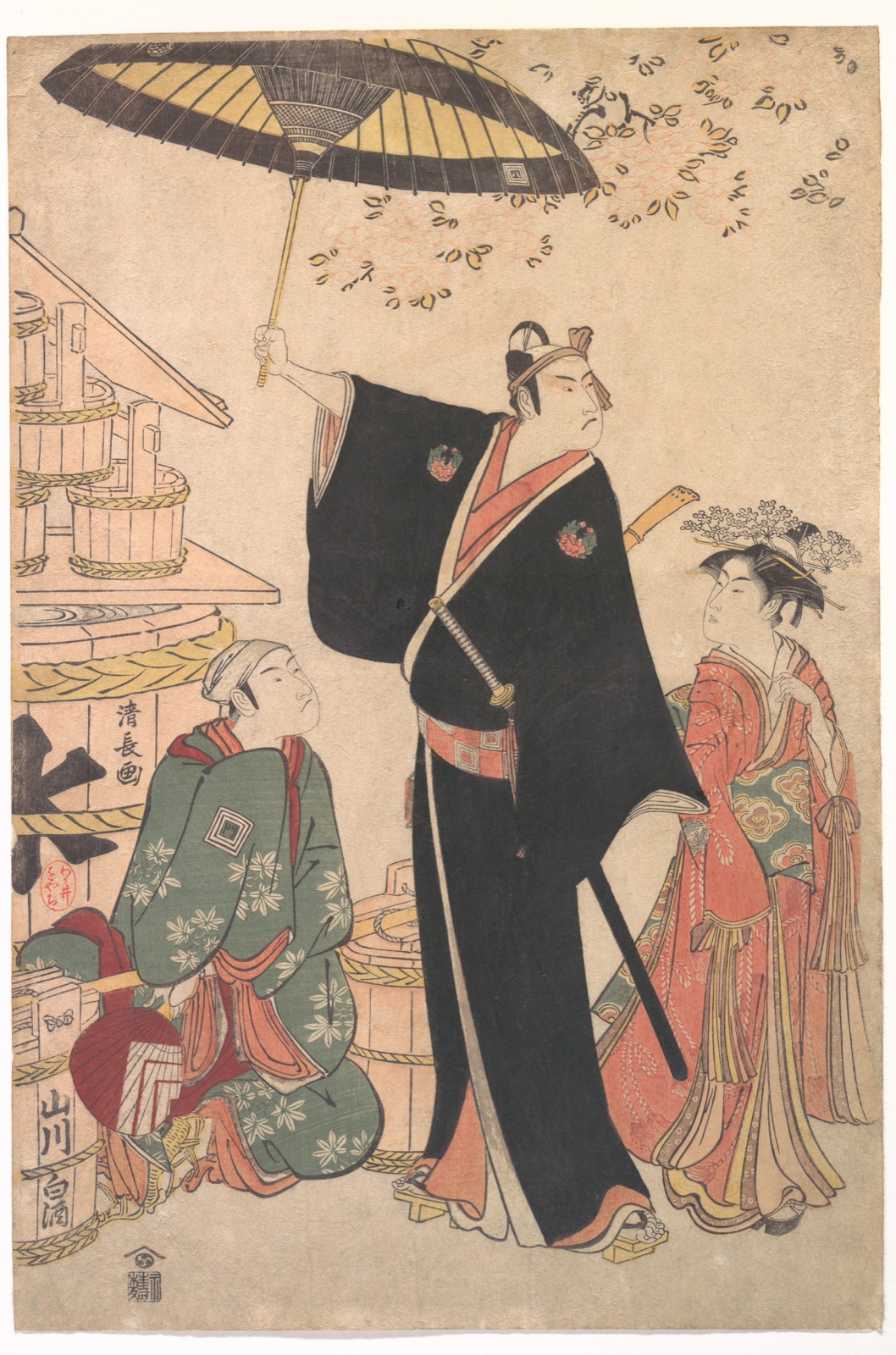
Torii Kiyonaga, Ichikawa Yaozō III as Sukeroku, from Sukeroku Yukari no Edozakura, 1784 (Tenmei 4) / The Metropolitan Museum of Art, Open Access (CC0) accession JP2603 (objectID 56749)
After the curtain falls, a question stays with you.
What became of the ground that scene was set on?
Only plays I have seen. Only places I have walked.
Tied to the Edo sectional maps and to the streets as they stand now —
that is the rule of this site.
Be warned: almost nothing is left. What you will find is a stone marker, a signboard, a park, a road that bends the way it always did. This site tells you what is actually there before you make the trip.
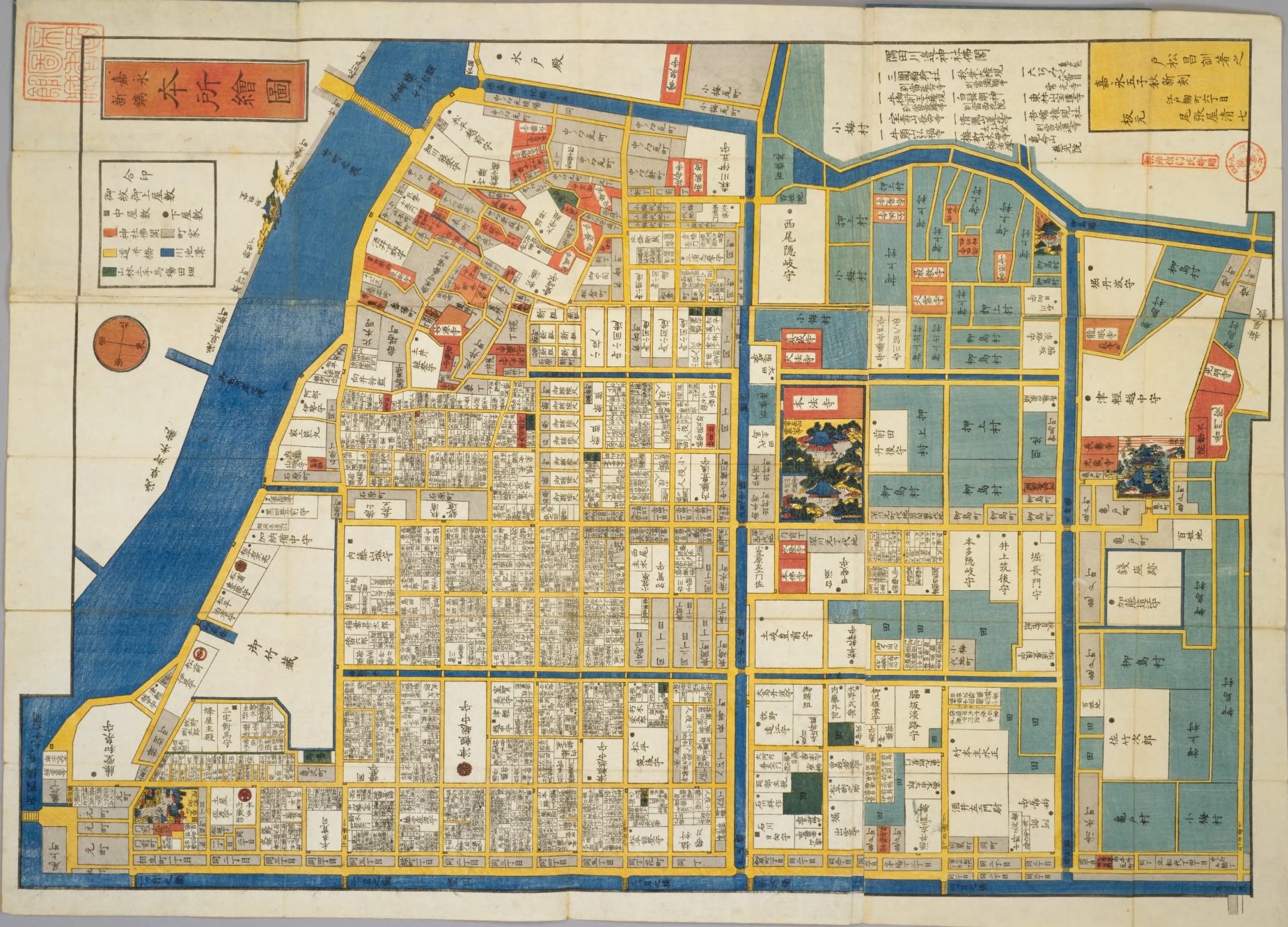
Honjo ezu, from the Edo kiriezu series compiled by Kageyama Munetaka, Tomatsu Masanori and Iyama Yoshitomo / published by Owariya Seishichi / 1849–1862 (Kaei 2 – Bunkyū 2)
Reproduced from the National Diet Library Digital Collections (out of copyright, Public Domain Mark)
dl.ndl.go.jp/pid/1286679
※ Solid pins mark names I could actually read on the map; dashed pins are still being checked. The Matsuura Bungo-no-kami estate carries a family crest, which this map's own legend assigns to a kami-yashiki (principal residence). Bungo-no-kami was the title of a cadet branch of the Matsuura family — the small Hirado Shinden domain — and the 1852 Bukan directory indeed lists that branch's residence here, on the Honjo riverbank. So the crest fits: a principal residence, but the cadet branch's. The main family's kami-yashiki — the play's Lord Matsuura — stood across the river at Torigoe in Asakusa (the Hōraien site); the main family also kept a shimo-yashiki in Honjo, and how it relates to this parcel is still being checked. — I first misread this parcel as "Matsuura Iki-no-kami," and its rank was an open question; the corrected reading and the Bukan settled it in August 2026.
The play opens on Ryōgoku Bridge in the snow. On stage, Lord Matsuura lives next door to Kira. In fact the neighbour to the north was a hatamoto (a direct retainer of the shogun) named Tsuchiya Chikara, and the Matsuura principal residence stood across the river at Torigoe in Asakusa. The neighbour was somebody else — and that gap is what I go and walk. Seen three times.
Read the article →"The moon is hazy, the whitebait are running" — Ojō Kichisa's famous speech, delivered on the riverbank. I met this play in my very first month of kabuki (the Dangiku-sai evening programme, 2016) and met it again in a Cinema Kabuki screening. The full-length production that should have been my third viewing never opened — Typhoon No. 19 cancelled the run. It is where this site began. The mound itself, though, cannot be pinned down: some place it near Yokoami-chō, others at Hyappongui.
Pilgrimage in preparationThe Yoshiwara that Sukeroku of Hanakawado walked to. What is left is the place name, the "looking-back willow", and a crossing still called Ōmon. This was a place people lived in, and the play and the ground are tied together with that in mind.
Research in progressThe mound survives, fenced in, inside a postwar housing estate. From the landscape of today back to the medieval Umewaka legend at the heart of the "Sumida River" plays.
Research in progressOnly works that appear in my record of 78 live performances, checked against ticket history and the programmes sold at the theatre.
Sites I have not visited are not published. Every photograph is one I took myself.
What cannot be confirmed is labelled as tradition, or as disputed. What I do not know, I say I do not know.